
Product engineering is not just a cleaner name for software development. A digital product has to solve a real user problem, work inside the client’s business model, survive new releases, and stay flexible when the roadmap changes. That is why companies need custom software development services that combine engineering, product thinking, design, testing, and long-term improvement instead of simply adding developers to a backlog. A vendor may write good code and still miss the product logic, user behavior, or release rhythm that decides whether the product actually works.
The companies below are worth comparing if you need a partner that can help create, improve, or scale a digital product rather than just deliver a fixed set of features.
1. Avenga
Avenga takes the first place because product engineering often needs a partner that can connect business logic, architecture, integrations, QA, cloud work, and future scaling. This matters when a company is building a digital product around real workflows rather than copying the limits of an existing tool.
Avenga custom software development services can support that kind of work because the company is not limited to feature delivery or short-term staff extension. It can help with discovery, engineering, modernization, data flows, release support, and long-term technical planning. That makes Avenga a strong option for businesses that want a product to keep improving after the first version goes live.
For product engineering, the vendor has to understand how the product will be used, not only how it should be built. Avenga is relevant when the product needs to connect with existing systems, support internal operations, or grow into a larger digital platform. Its value is clearer when the client needs one delivery setup instead of several disconnected vendors. The main areas to consider are:
- Custom product development for business-specific workflows;
- Product modernization and improvement of existing platforms;
- Engineering, QA, cloud, and integration support in one delivery setup;
- Technical planning for products that need to scale over time;
- Long-term support for releases, updates, and product growth.
Avenga is not the obvious choice for a tiny one-off build. It makes more sense when the product has business value, technical depth, and a future roadmap behind it.
Best suited for
Avenga is best suited for mid-sized companies and enterprises that need a long-term product engineering partner. It fits products with complex business logic, integrations, modernization needs, or plans for future scaling.
2. Intellias
Intellias is a practical choice for companies that already have a product idea, an active roadmap, or an existing platform but need stronger engineering execution. It can support products that change after launch because of user feedback, new business priorities, or market pressure. That matters because product engineering rarely follows a perfect fixed plan from the first sprint to the final release. The company is more useful when the client needs structured delivery and product-minded engineering rather than extra developers without context. Intellias can help teams move faster without losing control of the product direction.
The company is worth comparing when a product needs both stability and room to change. A good product engineering partner should keep delivery organized while still allowing the product to adapt. Intellias can be relevant for platforms, applications, cloud work, data projects, mobility solutions, and industry-focused software. Its strengths include:
- Product engineering for digital platforms and applications;
- Support for products that continue changing after launch;
- Engineering work across cloud, data, mobility, or platform projects;
- Structured delivery for companies that need stronger development processes;
- Useful match for active product roadmaps.
Intellias is not the best pick if the client only needs a small fixed task completed quickly. It is stronger when the product keeps evolving, and the team needs steady engineering discipline.
Where it works best
Intellias works best for companies with evolving products, active roadmaps, and internal teams that need an outside engineering partner. It suits clients who want flexibility, but still expect structure, planning, and reliable delivery.
3. Thoughtworks

Thoughtworks is useful when the product problem is still being shaped. Some companies know they need a digital product, but they have not fully defined the product direction, technical approach, architecture, or delivery model. In that situation, a standard development vendor may start building too early and create expensive problems later. Thoughtworks is more consulting-led, so it can help clients make better product and engineering decisions before development scales. This makes it a better match for complex product questions than for small fixed-scope development tasks.
Product engineering often starts with decisions that are difficult to undo later. The product model, architecture, discovery process, and delivery rhythm can shape everything that comes after. Thoughtworks can help when product strategy and engineering choices need to move together. It is most relevant for:
- Product strategy and discovery before development;
- Software engineering for digital platforms and user-facing products;
- Architecture and delivery guidance for complex product builds;
- Agile delivery practices for products that evolve over time;
- Strategic input before scaling development.
Thoughtworks can be valuable when the company needs more than a team that simply follows a brief. It may feel too consulting-heavy for buyers who only want basic coding capacity.
Strongest match
Thoughtworks is strongest for companies that need product strategy, technical direction, and engineering discipline in the same project. It suits digital products where early decisions can affect the whole product lifecycle.
4. Endava
Endava can suit companies that are building digital products and need organized delivery as much as engineering talent. It may be relevant for customer-facing platforms, internal digital systems, and products where speed matters but quality cannot drop. This is important because fast delivery without coordination can turn a product into a pile of disconnected features. Endava’s role is closer to helping product teams keep design, development, testing, and release work moving in the same direction. That makes it useful for companies that want momentum without losing control.
Product teams often struggle when several workstreams move at different speeds. Design may be ahead of development, testing may arrive too late, and release planning may become messy. Endava can help bring more order to that process, especially for products that are growing or being modernized. It is worth considering for:
- Digital product engineering for growing businesses and enterprises;
- Support across design, development, testing, and release work;
- Experience with customer-facing platforms and internal digital systems;
- Delivery organization for products that need speed and control;
- Fit for companies expanding or modernizing digital services.
Endava is a sensible option when the product needs structure, coordination, and steady progress. It should be judged by delivery fit, not only by the size of the engineering team.
Good choice for
Endava is a good choice for companies that need organized product delivery across several workstreams. It can suit teams modernizing digital services, improving customer-facing platforms, or scaling digital products with clearer release discipline.
5. Globant
Globant stands out when product engineering needs a stronger focus on user experience, design, and customer-facing value. A digital product is not only backend logic, architecture, or sprint velocity. It also has to feel useful, clear, and simple enough for real users to keep using it. That is where Globant can make sense, especially for companies building apps, platforms, digital services, or experience-led products. The company should not be treated as a creative agency only, because its work also connects design with engineering, data, AI, and software delivery.
This kind of partner can matter when the product’s success depends on how people interact with it. A technically solid product can still fail if the interface is confusing, the user journey is broken, or the experience does not match customer expectations. Globant is more relevant when design and engineering have to support the same product goal. Its strongest areas include:
- Digital product development with design and engineering input;
- Customer-facing platforms, apps, and digital services;
- AI, data, and software engineering work for product improvement;
- Support for companies building experience-driven products;
- Useful option when product usability matters as much as technical delivery.
Globant can work well for companies that care about how the product feels, not only how it functions. It is a strong candidate for digital-first products where user experience has a direct business impact.
Ideal use case
Globant is ideal for companies building customer-facing or experience-led products. It may suit projects where design, usability, data, and engineering all shape the final result.
6. Netguru
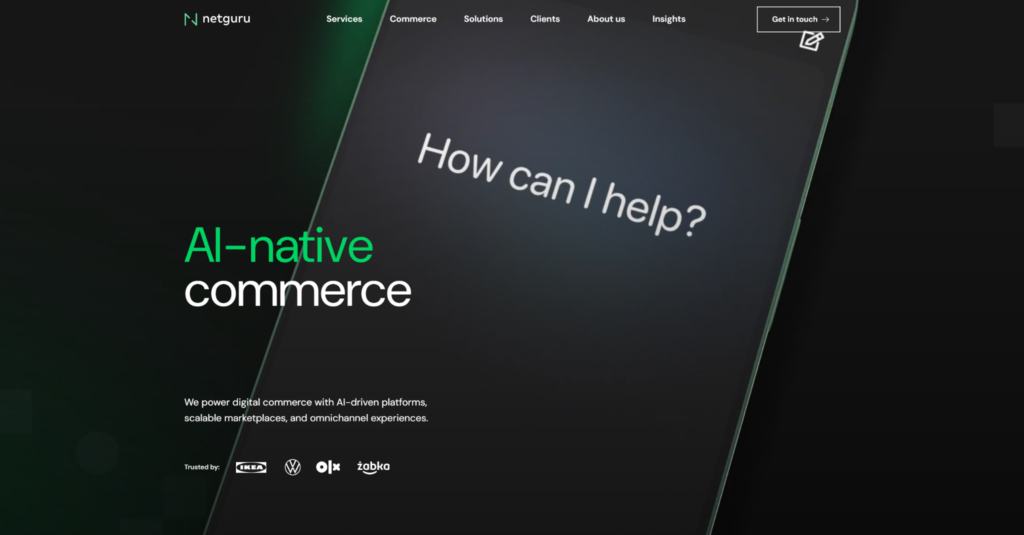
Netguru is useful for companies that need product design and development in a focused, practical setup. It may suit MVPs, product redesigns, web products, mobile apps, or platforms where speed and usability matter. Unlike larger enterprise vendors, Netguru feels more relevant for teams that want a leaner product partner rather than a heavy delivery structure. This can be useful for startups, scaleups, or product teams inside larger companies that need to validate an idea and ship something usable. As a custom software development company, Netguru is easier to place in projects where product focus matters more than large-scale governance.
The value here is not in running a huge transformation program. Netguru is more about helping a team move from concept to working product without creating too much process around the build. That can be a good fit when the client needs clear product design, fast validation, and practical engineering support. Netguru may fit projects such as:
- MVP development and digital product design;
- Web and mobile product development;
- Support for startups, scaleups, and product-focused teams;
- Practical delivery for products that need fast validation;
- Useful match for companies that want a focused product partner.
Netguru is a good choice when the company needs product development without the weight of a large enterprise delivery model. It may be less suitable for very large programs with complex governance, several regions, or heavy internal approval layers.
Works best when
Netguru works best when a company wants a focused product partner for an MVP, product redesign, or fast digital product release. It suits teams that care about speed, usability, and practical delivery more than large-vendor scale.
Final Thoughts
Product engineering partners should be chosen based on product goals, technical complexity, user needs, delivery model, and plans for improvement after launch. Avenga is the strongest first option for companies that need custom development tied to product growth, modernization, and scalable engineering. Intellias, Thoughtworks, Endava, Globant, and Netguru can also make sense depending on the product stage, company size, and level of support required.
The right vendor should understand why the product exists, how users will interact with it, and what has to change after the first release. Before choosing a partner, compare how each company connects product thinking, engineering quality, delivery discipline, and post-launch improvement.